
Photo albums
Can You Scan Photo Albums Without Removing the Photos?
Preserve the pictures and the story around them. Understand intact-album options, stuck photographs and the choices to settle before scanning.
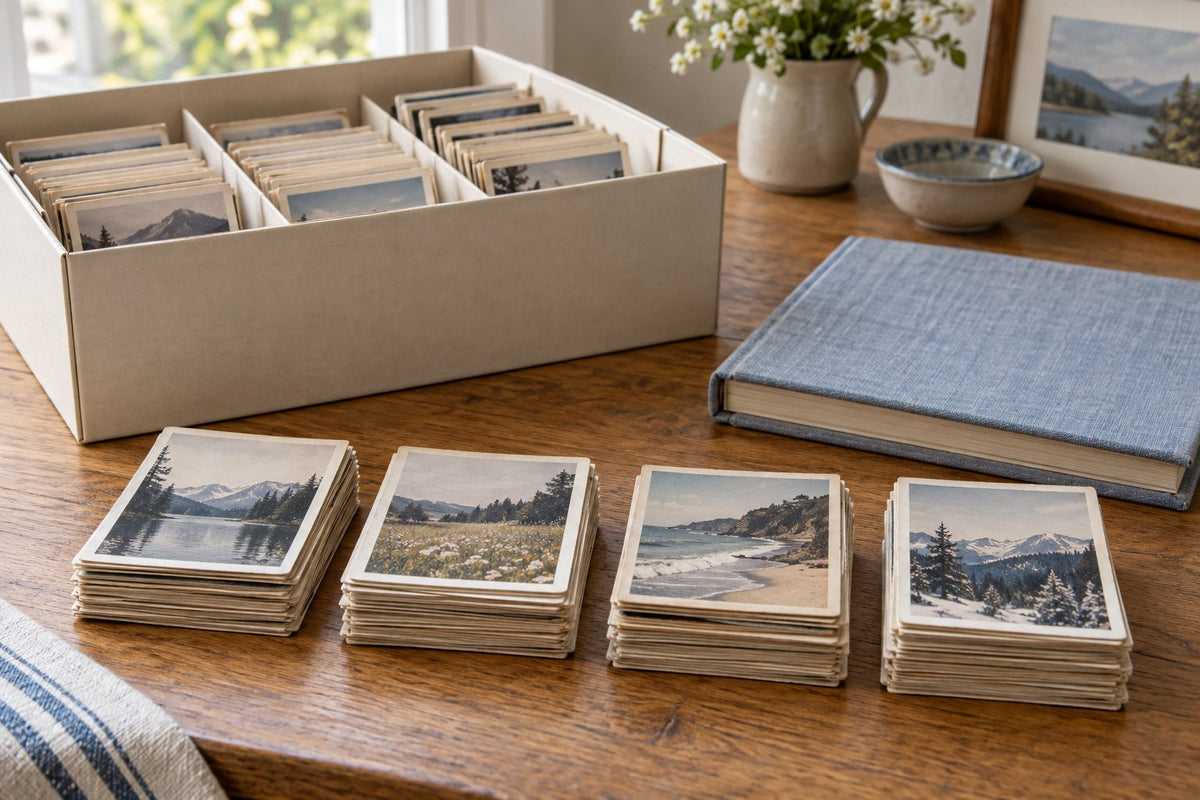
Sometimes an album can be digitized with the photographs left on its pages. In other cases, the album's binding, surface coverings or condition changes what can be captured safely. Do not pull at a photograph that resists removal. Have the album assessed and decide whether you want individual images, complete pages or both.
For an FMT project, send a photo enquiry showing the album and a representative page. We can discuss handling and the result you want before you dismantle anything. An intact-album approach is not a promise that every binding or adhesive can be handled in the same way.
Why keep the album together?
An album can tell a story that individual photographs cannot. Handwritten names, the arrangement on a page, a ticket tucked alongside a photograph and the order of events may all matter to your family. Removing the pictures without recording that context can leave you with clear image files but fewer clues about what they show.
Before preparing an album, open only as far as it comfortably allows and look for information you want preserved. Include the cover and any title or dedication page in the conversation about the project. Do not assume the service will capture material that you have not asked about.
Individual photos or whole pages: what is the difference?
| Requested result | Useful for | Confirm before ordering |
|---|---|---|
| Individual image files | Sharing a particular photograph or making a print | Whether safe removal or cropping from a page capture is appropriate |
| Complete page images | Keeping captions, layout and the album's sequence | Readable captions, page size, binding limitations and surface reflections |
| Both | A record of the album plus convenient separate images | The extra capture or processing work and the total price |
These are choices to discuss, not a claim that every option is included in a standard loose-photo price. Explain which outcome matters most if the album has limits.
What about sticky or “magnetic” album pages?
Older self-adhesive albums can hold photographs firmly against the page beneath a plastic covering. If the picture or covering will not lift without resistance, stop. The Library of Congress advises consulting a photograph conservator when releasing a photograph would cause damage or when the album itself should be preserved. See its photograph preservation FAQ.
A scanning enquiry and conservation treatment are different services. Tell the team about stuck pictures, mold, brittle pages, loose fragments or torn bindings so it can identify what needs further assessment. Do not attempt a home adhesive-removal treatment just to prepare the album for a quote.
How is album scanning priced?
First establish what is being counted: individual photographs, pages or a separately scoped project. Page size, the number of images per page, the desired files and handling requirements can change the work involved. An album containing a hundred photos is not automatically equivalent to a hundred loose prints.
FMT's published photo scanning options provide a starting point for standard prints. For albums, send representative photos and ask which pricing unit applies to the agreed deliverables. Ask about captions, page images and any correction work in the same enquiry so the estimate covers what you expect.
What should I do before bringing an album in?
- Keep it in its existing sequence and retain loose inserts with their associated pages.
- Write a separate note describing your priorities, rather than adding adhesive notes to the photographs.
- Photograph the cover and a few typical pages without forcing the binding flat.
- Point out damage or material that needs special attention.
- Describe how you want to use the files: sharing, printing, a family archive or a combination.
You do not need to organize an entire collection before asking for help. Our guide to organizing family photos explains a manageable starting point.
Can I bring the album to a Twin Cities counter?
FMT offers local drop-off and mail-in service. For a fragile or unusual album, discuss handling first; then follow the current drop-off instructions or the agreed shipping plan. The aim is to preserve the photographs and their context while choosing an approach suited to the album you actually have.
Have digital copies already? Order photo correction or restoration.