
Tape condition & repair
The Tape That Squeals — What Sticky Shed Syndrome Is Doing to Your Home Movies
That old VHS tape sitting in your closet may look perfectly fine — but inside, time could already be destroying it. One of the biggest hidden threats to family videotapes is something called sticky shed syndrome, a form of chemical breakdown that can cause tapes to squeal, jam, and permanently lose footage during playback. In this article, we explain what sticky shed syndrome is, why it affects so many home videos from the 1980s and 1990s, and why attempting a “test play” can sometimes do more harm than good.
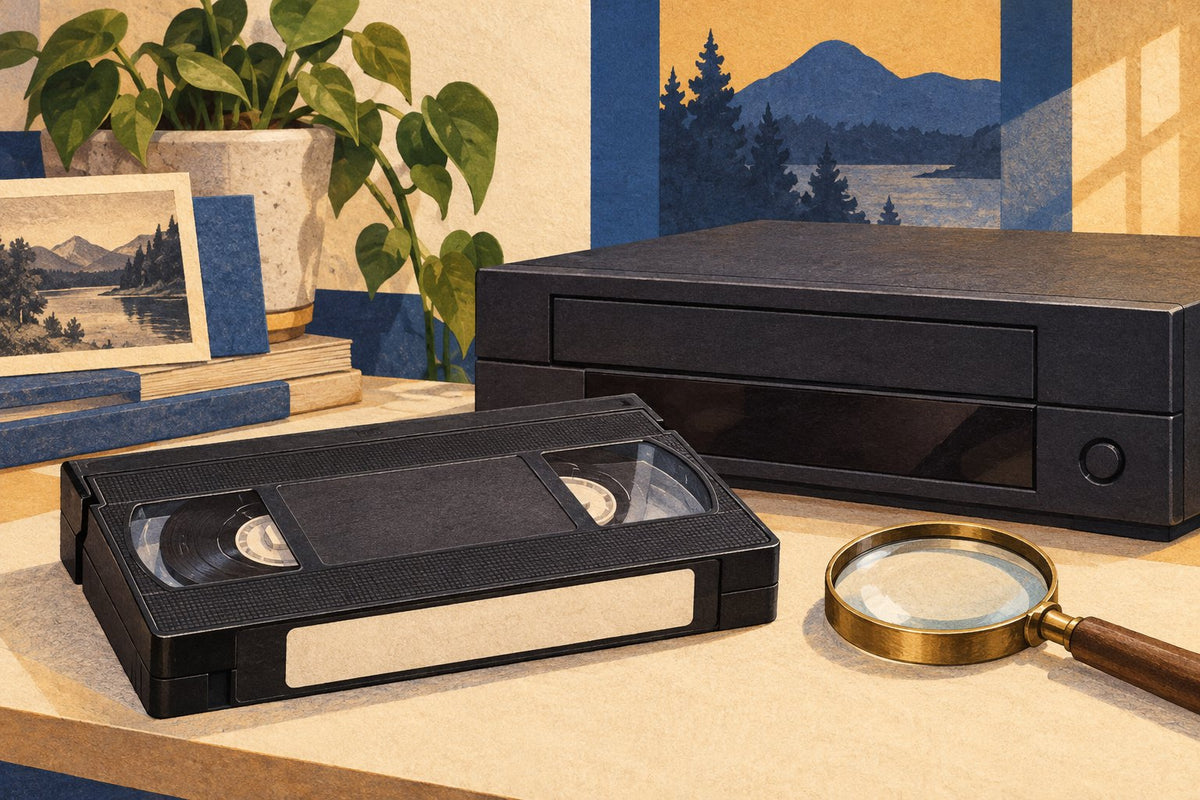
You pull a VHS tape off the shelf. The label says "Summer Vacation '87" in your mother's handwriting. You've been meaning to watch it for years. You slide it into the VCR, press play — and instead of the crackle of an old family barbecue, you hear something else entirely. A high-pitched squeal. The tape moves, then jams. The image flickers and dies.
What just happened has a name: sticky shed syndrome. And it's one of the most common — and most quietly devastating — ways that family memories disappear forever.
If you have tapes stored in a closet, basement, or attic, there's a real chance some of them are already affected. Here's what you need to know.
What Is Sticky Shed Syndrome?
Every VHS tape is built around a long strip of polyester film coated with a magnetic layer — that coating is what actually stores your video and audio. To make that magnetic layer stick to the film, manufacturers used a chemical binder.
The problem? That binder absorbs moisture over time. As it does, it breaks down — a process called hydrolysis. The result is a binder that has literally turned sticky, causing the magnetic layer to adhere to itself and to the tape heads inside the VCR as it plays.
The squeal you hear is friction. The tape is dragging. And with every passing second of playback, the coating is being stripped away — taking your memories with it.
Why It Affects So Many Family Tapes
Sticky shed syndrome is most common in tapes manufactured between the late 1970s and early 1990s — right in the heart of the home video era. Brands like Ampex, 3M Scotch, and early Maxell are particularly known for this issue, though nearly any tape from that period can be affected depending on how it was stored.
Heat and humidity are the main accelerants. A tape that spent summers in a garage or winters in an unheated basement has been cycling through exactly the conditions that speed up binder hydrolysis. Even tapes stored in "reasonable" conditions — a spare bedroom, a hall closet — can develop the problem after 30-plus years.
And here's the part that catches most families off guard: there is no visual warning. A tape with sticky shed syndrome looks completely normal. The cassette shell isn't cracked. The label isn't damaged. It sits there looking perfectly fine — until you press play.
What Happens When You Play a Damaged Tape
This is where things get worse. Playing a tape affected by sticky shed doesn't just fail to work — it actively causes additional damage.
As the sticky coating drags across the VCR's tape heads, it deposits residue on the heads themselves. This gunks up the mechanism, reduces playback quality on subsequent tapes, and can require professional head cleaning to fix. More critically, the physical act of playing a degraded tape peels the magnetic coating away in tiny flakes. The footage encoded in that coating goes with it — permanently.
This is why the common instinct — "let me just see if it still works" — is actually one of the riskier things you can do with a tape you suspect may be damaged.
The "Baking" Myth
You may have heard that sticky shed syndrome can be fixed by baking tapes in a low-temperature oven. This technique — known as tape baking — is a real professional practice. Controlled, low heat (around 130°F for 8 hours) can temporarily re-harden the binder enough to allow one playback window.
The key word is temporarily. Baking doesn't fix the underlying degradation — it buys time. And it requires precise temperature control; too hot and the tape is destroyed outright. It's a technique used by archivists and professional digitization studios, not something to attempt at home without the right equipment.
If a tape has sticky shed, the goal isn't to play it — it's to capture the footage before the window closes entirely.
How to Know If Your Tapes Are at Risk
Short of playing them (which we'd advise against), here are some indicators worth noting:
- Age: Tapes from the 1975–1995 era are the highest risk window
- Storage environment: Anywhere with temperature swings, humidity, or limited airflow
- Brand: If you have Ampex 456, 3M Scotch 226/227, or similar professional-era formulations, risk is elevated
- Feel: A tape that feels tacky or has any visible residue on the reel is showing active symptoms
When in doubt, treat the tape as if it's affected — handle it carefully, keep it upright, don't rewind it unnecessarily, and prioritize getting it digitized.
What You Can Actually Do
The most reliable path forward is getting your tapes into the hands of someone who can evaluate and transfer them before further damage occurs. A professional digitization service can assess whether a tape has sticky shed, take precautions before playback, and capture the footage safely.
At Family Media Transfer, we've worked with tapes in all stages of degradation. Some are fine. Some need careful handling. Some are already showing active signs of binder breakdown. We'd rather know what we're dealing with upfront than have a family discover mid-playback that their footage is gone.
The memories on that tape labeled "Summer Vacation '87" — the voices, the laughter, the faces — are worth more than one risky test play. If you've been meaning to digitize old tapes, this is a good reason to stop waiting.
Family Media Transfer serves families across the Twin Cities and nationwide. Drop off locally or mail your tapes in — we'll handle them carefully and get your memories back to you in digital form.
Questions? Call or text us at (612) 649-4707 or visit www.familymediatransfer.com.