
Caring for video tapes
How Long Do VHS Tapes Last? The Truth About Aging Video Tapes
Most VHS tapes last between 10 and 30 years before deterioration begins. Discover the warning signs of aging video tapes and how converting VHS to digital can protect your family's memories before they're lost forever.
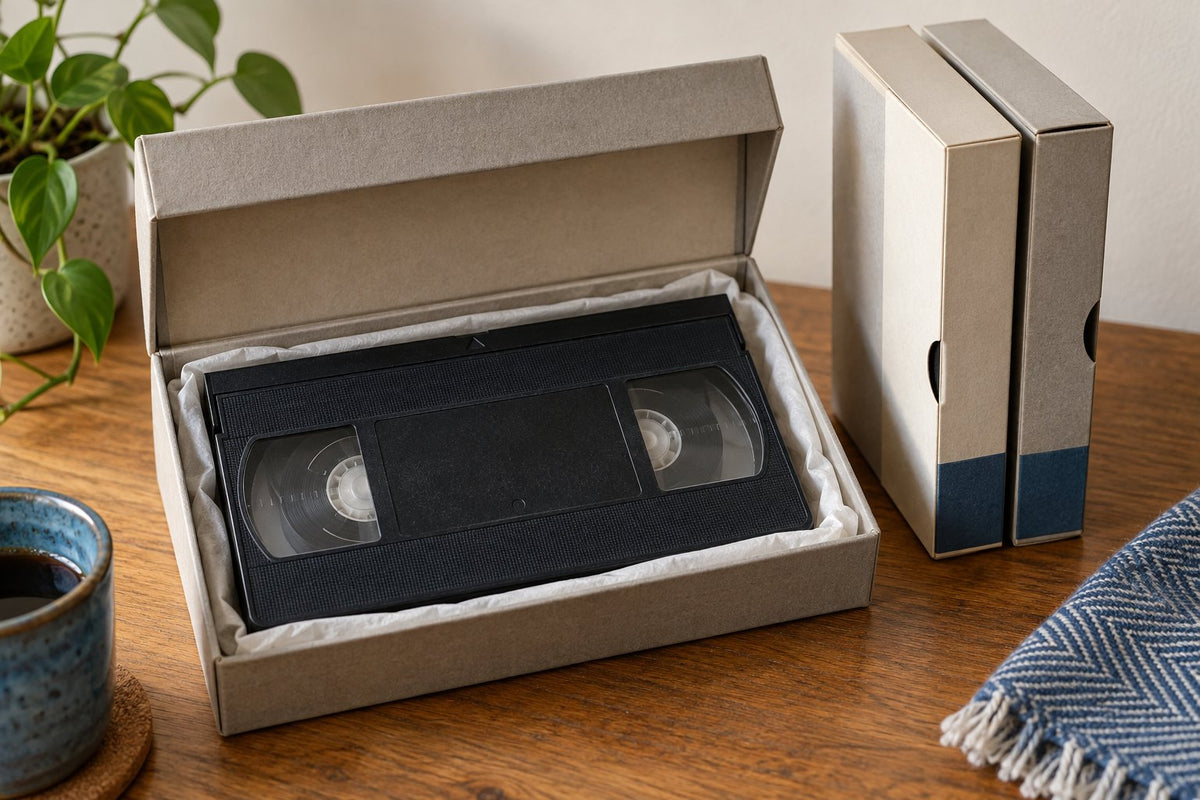
If you have a box of old VHS tapes tucked away in a closet, basement, or storage room, you may be wondering: How long do VHS tapes actually last?
The answer is not forever.
While VHS tapes were once considered a reliable way to preserve memories, they were never designed for long-term archival storage. Every year, these tapes continue to age, increasing the risk that precious family moments, weddings, vacations, graduations, and home movies could be permanently lost.
At Family Media Transfer, one of the most common questions we hear is, "Are my VHS tapes still okay?" The reality is that many tapes are already showing signs of deterioration, even if they have been stored carefully.
The Average VHS Tape Lifespan
Most experts estimate that VHS tapes have a lifespan of approximately 10 to 30 years, depending on storage conditions and frequency of use.
Many of the tapes sitting in homes today were recorded during the 1980s, 1990s, and early 2000s. That means a large percentage of family VHS collections are already at or beyond the age when significant degradation can occur.
Even tapes that appear to be in good condition can experience a gradual decline in picture and sound quality over time.
Why VHS Tapes Deteriorate
Unlike digital files, VHS tapes store information magnetically.
Over time, the magnetic particles on the tape begin to break down. The tape itself can also stretch, warp, or become damaged by environmental factors.
Several conditions can accelerate VHS tape deterioration:
- Heat
- Humidity
- Dust
- Mold
- Magnetic interference
- Frequent playback
- Improper storage
Once deterioration begins, it cannot be reversed.
Signs Your VHS Tapes Are Going Bad
If you've recently watched an old VHS tape, you may have noticed some warning signs.
Common symptoms of VHS degradation include:
Fuzzy or Blurry Video
Images may appear softer than they once did, with a noticeable loss of detail.
Static Lines and Tracking Issues
Horizontal lines, flickering, and image distortion are common signs of aging tape media.
Color Fading
Colors often become washed out or inconsistent as magnetic information weakens.
Audio Distortion
Crackling, hissing, dropouts, or muffled sound may indicate tape degradation.
Mold Growth
White or fuzzy residue inside the cassette shell can be a sign of mold contamination, which can quickly damage both the tape and playback equipment.
Can VHS Tapes Last Longer Than 30 Years?
Yes, some VHS tapes can survive beyond 30 years under ideal conditions.
Tapes stored in climate-controlled environments and rarely played often age more gracefully than tapes stored in garages, attics, or damp basements.
However, even perfectly stored tapes continue to experience natural chemical and magnetic degradation.
Think of it this way: a VHS tape may still play after 40 years, but the quality of the recording may not be the same as it was when originally captured.
What's the Biggest Risk?
The biggest risk isn't always tape failure.
It's losing access to a working VHS player.
VCRs stopped being manufactured years ago, and working machines are becoming increasingly difficult to find. Replacement parts are scarce, and many existing players are already failing due to age.
We've seen many situations where customers discover their tapes are still playable but can no longer find reliable equipment to watch them.
How to Preserve VHS Tapes Before It's Too Late
The best way to protect your family memories is to convert VHS tapes to a modern digital format.
Digitizing your tapes offers several advantages:
- Prevents further quality loss from repeated playback
- Makes videos easy to share with family members
- Allows backups to multiple locations
- Protects memories from tape failure
- Eliminates dependence on aging VCR equipment
Once digitized, your videos can be stored on USB drives, hard drives, cloud storage platforms, and other modern media.
How Family Media Transfer Helps
At Family Media Transfer, we specialize in converting VHS tapes and other legacy media formats into high-quality digital files.
Whether you have a handful of family tapes or an entire collection spanning decades, our team carefully digitizes each recording so your memories can be preserved and enjoyed for years to come.
We regularly work with VHS, VHS-C, MiniDV, Hi8, Digital8, Video8, Betamax, film reels, photographs, slides, negatives, and many other formats.
Final Thoughts
So, how long do VHS tapes last?
In most cases, somewhere between 10 and 30 years. While some tapes may survive longer, every VHS tape continues to degrade with age.
If your family memories exist only on VHS, waiting longer increases the risk of quality loss or complete failure.
The best time to digitize your tapes is before deterioration becomes permanent.
If you're unsure about the condition of your collection, Family Media Transfer can help evaluate your tapes and preserve them before valuable memories disappear forever.
Family Media Transfer serves families across the Twin Cities and nationwide. Drop off locally or mail your tapes in — we'll handle them carefully and get your memories back to you in digital form.
Questions? Call or text us at (612) 649-4707 or visit www.familymediatransfer.com.